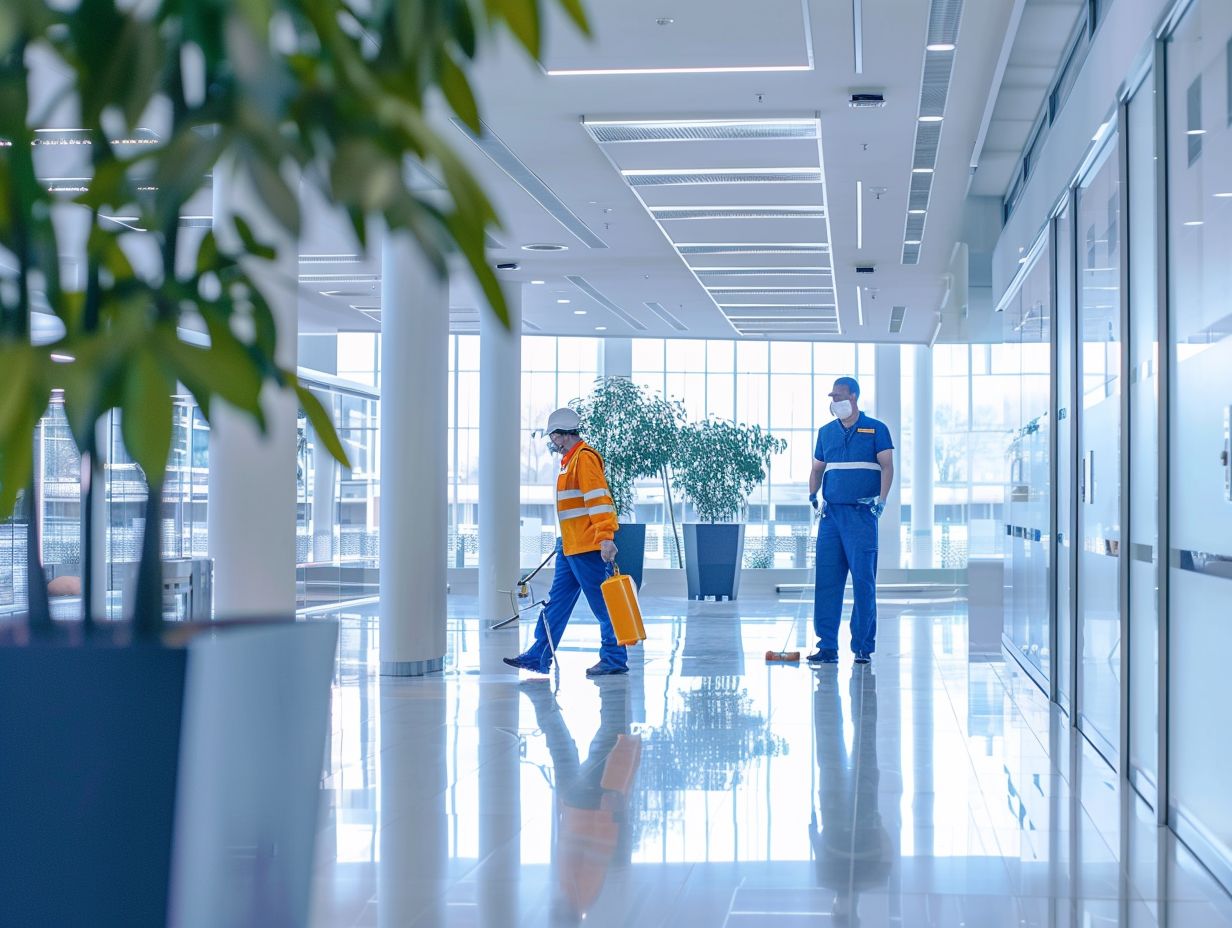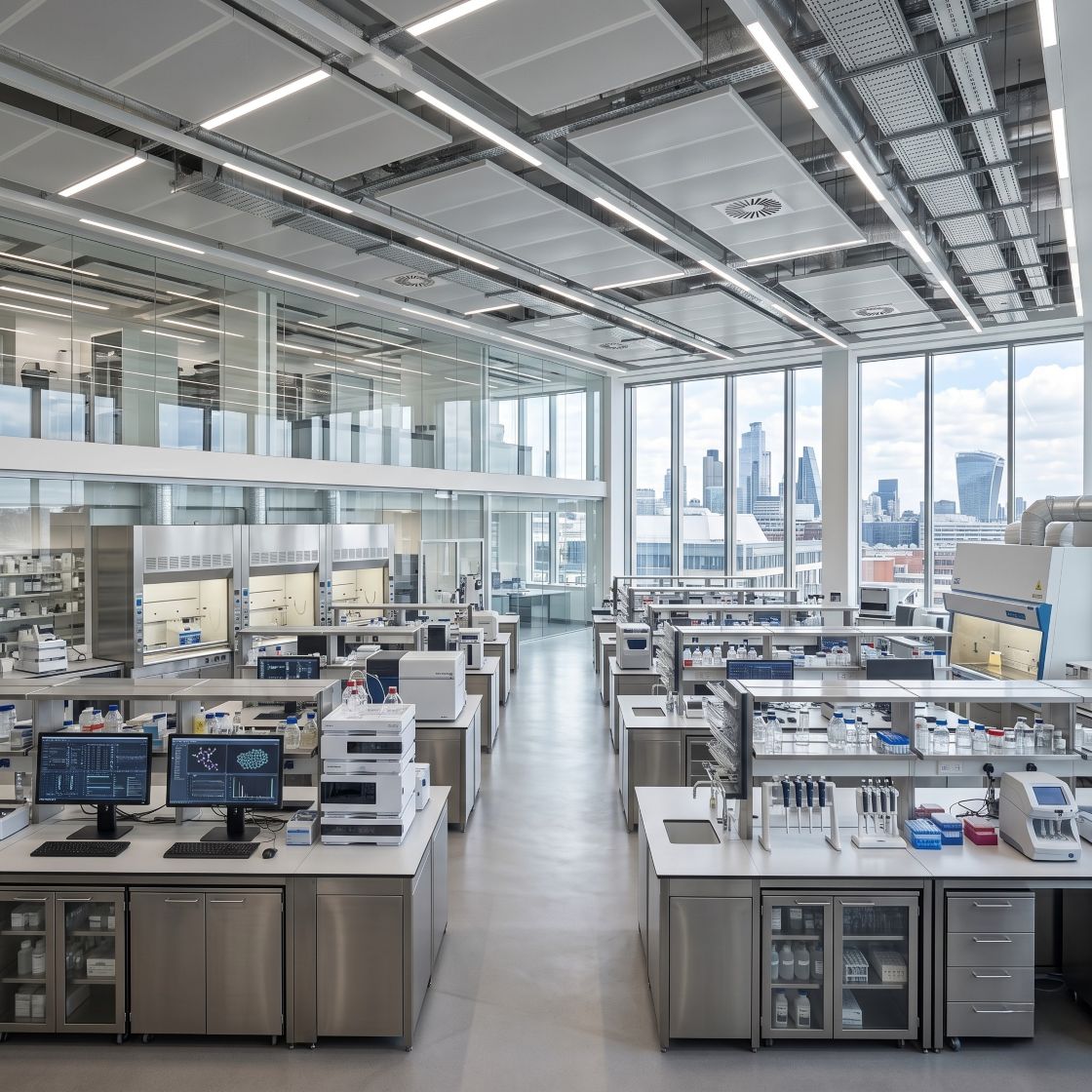
The first time I was asked to quote for a research laboratory, I made the mistake of treating it like a posh office with more glassware. I turned up with my usual kit, took one look at the airlock, the gowning bench, and the sign warning that a single rogue skin flake could ruin six months of someone’s PhD, and quietly recalibrated my entire understanding of the job. Cleaning a lab is not cleaning a bit more carefully. It is a different discipline that happens to involve a mop, in roughly the way that flying a plane is a different discipline that happens to involve a steering wheel. London is thick with these spaces now – biotech start-ups around King’s Cross, pharmaceutical R&D out west, university research wings, materials science labs tucked into converted industrial units in the east. They all share one unforgiving truth: in a laboratory, the cleaning is not there to make the place look nice. It is there to protect the science, the people, and sometimes the public. Get it wrong and you are not facing a grumpy facilities manager. You are facing a contaminated batch, a failed audit, or a genuinely dangerous spill nobody dealt with properly.
Why a Laboratory Is Not Just an Office With Microscopes
The instinct to lump labs in with general commercial cleaning is understandable and completely wrong. An ordinary office wants to look clean. A laboratory needs to be clean to a standard you can measure, document, and defend. Those are not the same ambition, and the gap between them is where the specialist work lives.
Controlled Environments and the Tyranny of the Particle
Many London labs operate as controlled environments, and a good number run formal cleanrooms classified under ISO 14644, where the air is graded by how many particles of a given size it is allowed to contain per cubic metre. In a setting like that, the cleaner is not the enemy of dirt so much as the enemy of particles, and a careless wipe with the wrong cloth can add more contamination than it removes. Everything is chosen to shed as little as possible: non-linting wipes, dedicated mop systems, cleaning agents filtered and matched to the surface. You work in a deliberate direction, generally from the cleanest zone outward to the dirtiest, never doubling back and undoing your own progress. It is the cleaning equivalent of painting yourself out of a room rather than into a corner, and once you internalise it, ordinary cleaning starts to feel reckless by comparison.
Cross-Contamination, the Invisible Villain
The single biggest sin in lab cleaning is cross-contamination – dragging something from one area into another where it has no business being. That is why colour-coded equipment is gospel, why a mop that has touched a biological area never goes anywhere near a chemistry bench, and why “I’ll just give it a quick rinse” is a sentence that should make any lab manager break out in a cold sweat. The villain here is invisible, which is exactly what makes it dangerous. You cannot see a cross-contaminated surface the way you can see a missed coffee ring. You only find out it went wrong when the results stop making sense, and by then it is somebody else’s very expensive problem.
The Contamination Risks Hiding in Plain Sight
What makes lab cleaning genuinely hazardous is that the risks rarely look like risks. There is no skull-and-crossbones hovering helpfully over the danger. There is a beaker, a bench, a fridge, and a series of assumptions that can hurt you if nobody has spelled them out.
Biological, Chemical and the Ones You Cannot See
Laboratory contamination broadly falls into a few camps, and each demands its own respect. Biological agents – cultures, samples, anything that was recently alive or aspires to be – require containment-aware handling and the right disinfection regime, not a splash of supermarket spray. Chemical residues range from mildly irritating to genuinely corrosive, and mixing the wrong two while cleaning can produce something far nastier than either alone. Then there is the category that unsettles people most: the contamination you cannot detect with any of your senses. Radioactive trace work, certain fine particulates, residues that are perfectly invisible and perfectly capable of causing harm. This is precisely why a lab cleaner must never improvise. The protocol exists because somebody, somewhere, learned the hard way what happens without one.
Reading the Room: Risk Assessments and COSHH
Before a single surface is touched, the work has to be governed by proper risk assessment, and under UK law that means COSHH – the Control of Substances Hazardous to Health regulations – sitting at the centre of everything. A competent lab cleaning operation does not show up and wing it. It works from documented assessments, safety data sheets for every product in the trolley, and a clear understanding of what is in the room, what it can do, and what to do if it ends up somewhere it should not. Think of it as the briefing before the heist in every caper film ever made, except the stakes are real and the prize is simply that everyone goes home unharmed and the experiment survives the night.
PPE: The Wardrobe That Keeps You Alive
People imagine PPE as a bit of theatrical dressing-up, the lab-coat-and-goggles look that says “serious science happening here”. In reality it is the difference between a routine shift and a trip to A&E, and the specific kit depends entirely on what the room contains.
Dressing for the Hazard, Not the Occasion
At the gentler end, you are looking at gloves chosen for the chemicals in play – nitrile, not whatever was cheapest – along with eye protection, a lab coat or coverall, and sensible footwear that nothing can soak through. Step up the hazard and the wardrobe escalates: full coveralls, respiratory protection rated for the airborne risk, double-gloving, shoe covers, the lot. In a cleanroom, the gowning regime exists as much to protect the environment from you as to protect you from it, which is a humbling thought the first time a hairnet is involved. The cardinal rule is that PPE is matched to the assessed risk of the specific space, never assumed, never reused inappropriately, and never treated as optional because it is a warm day and the coverall is a faff.
The Bit Everyone Forgets: Taking It Off
Here is the detail that separates the trained from the merely well-intentioned. Putting PPE on is easy. Taking it off without contaminating yourself is a genuine skill, because the entire point is that the outside of your gloves and coverall may now be carrying whatever you were protecting against. There is a correct sequence – a careful, deliberate doffing routine – and skipping it can undo all the protection in a single thoughtless tug. I have watched perfectly sensible people gown up like surgeons and then peel everything off like they were getting out of a wetsuit on a cold beach, which rather defeats the object. The discipline does not end when the cleaning does. It ends when the PPE is safely and correctly disposed of.
Specialist Protocols That Separate the Pros From the Pretenders
This is where a proper laboratory cleaning contractor earns its place, because the protocols are not negotiable folklore. They are systems, and they are auditable.
Validated Methods, Logged and Auditable
Serious lab cleaning is documented cleaning. Methods are validated, meaning somebody has proven they actually achieve the required standard rather than merely hoping so. Work is logged, signed, and dated, so that when an auditor arrives – and in regulated London facilities, they will – there is a clear record of what was cleaned, when, with what, and by whom. Cleaning agents are rotated where biological resistance is a concern, contact times for disinfectants are respected rather than rushed, and consumables are controlled. It is unglamorous, meticulous, paperwork-heavy work, and it is exactly the sort of thing that looks like overkill right up until the moment it saves a facility from a failed inspection.
Waste, Spills and the Things You Must Never Bin Normally
Laboratory waste is a world unto itself. Sharps, biological waste, chemical waste, and contaminated consumables each have their own disposal stream, and putting any of them in the general bin is the kind of mistake that has consequences far beyond a telling-off. Spill response is its own protocol too – knowing which spills you can handle, which require evacuation and a specialist, and how to contain rather than spread. A trained lab cleaner treats an unidentified spill the way a bomb disposal officer treats an unidentified package: with respect, with procedure, and with absolutely no urge to be a hero about it. The aim is never to improvise a solution. The aim is to follow the plan that already exists for exactly this moment.
The London Context: Why This Matters More Than Ever
London’s research sector has expanded enormously, and with it the number of premises that genuinely need specialist cleaning rather than the once-over they too often receive. The capital’s labs sit cheek by jowl with offices, in shared buildings and converted spaces never designed with containment in mind, which makes disciplined cleaning more important, not less. The cost of getting it wrong is not measured in a grubby reception or a complaint. It is measured in ruined research, regulatory trouble, and the safety of the people who spend their days at those benches doing work that genuinely matters. A laboratory is the rare environment where the cleaner is not a finishing touch but a frontline part of the system that keeps everything safe and sound. That deserves treating as the specialist discipline it is, by people who have learned the protocols properly and respect why every single one of them exists.